The clock stuck twelve. It’s October 30th. In a heartbeat I emerged an adult in the eyes of American law. In an alternate universe, I danced the night into a hazy sunrise. But I left celebration to Haight St. patrons, their addled revelry spilling muffled through the crack in my window. Tonight, we work.
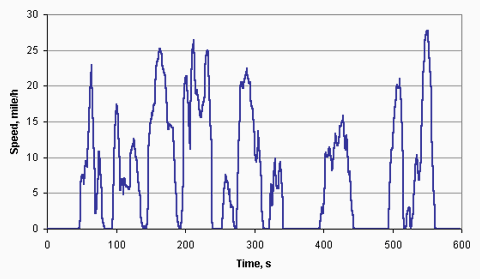
Dawn, a night and two weeks later. It was ready; the design for the both the engine and the drivetrain, encoded in a scattered handful of drawings and documents, one wiki, two heads, and a thousand lines of physical simulation code. The first test: powering a scooter through a staccato ride amid frenzied Manhattan traffic, calculating, by the hundredth second, the will of the engine, and the vehicle’s reply. We’d follow a path devised to track emissions from humming, throbbing combustion engines, byproducts of fuel burnt in tiny explosions sparked every second by the thousands.
But nothing save cool air would our machine exhale. Compressed air, ‘a thermomechanical battery’ of sorts, is cheap, long lasting, and quick to recharge (one need only open a valve, and if impatient, run a pump, the tank will fill in seconds.) What’s more, it’s efficient. A batteries charge begins life in mechanical form, in a spinning turbine if charged off the grid, or in the inertia of a vehicle, during regenerative braking. This is then converted into AC electrical current, which is converted into DC current, which, finally, is converted into mechanical energy, losing power at each step. To power the engine this whole process runs in reverse! But compressing or expanding air keeps mechanical energy mechanical (so long as temperature is kept reasonably constant.) In powering vehicles it is superior to the most advanced battery systems known. That is, in every parameter but one.
Historically, the low energy density of compressed air had crippled any attempt to venture further than a couple dozen miles; physics, it seemed, demanded tanks of excessive proportions to travel longer. At 300 bar (‘scuba pressure’), compressed air could release only half a percent as much energy as the same volume of gasoline burnt. We understood, however; it was an efficiency war. We knew that conventional vehicles were incredibly wasteful. There were many battles left to fight.
The Laws of Thermodynamics1
“You can’t win.”
“You can’t break even.”
“You can’t give up.”
We hunted losses relentlessly. We were repaid with a series of compounding improvements, each building upon another, reversing the conventional patterns of efficiency losses endured by vehicles for more than a century. Finally, in a brilliant and unusually compact layout by Steve Crane, we found room to replace the paltry 1.3 gallon gas tank with one ten times its size. Nights yielded to our toil, and, slowly but surely our enemy routed.
“We’ve cracked the code,” we exclaimed. “The city is ours to conquer.” On the highway, whatever benefit earned by our scooter’s light weight, low rolling resistance and ultra-efficient regenerative braking would be dominated by air resistance.2 But air resistance falls quickly with speed, and in the stop-start motion of the city our combined inventions would give our scooter an efficiency historically unmatched.
I keyed in the last few drivecycle parameters, drew a shallow breath, cocked my head, and pressed the enter key. The simulation lasted only a moment, but in that time, my little scooter ran more than one hundred and twenty miles, the equivalent of dozen rides between Wall Street and the Bronx on a single tank. “We’re in business,” I said. With that, and for all of a New York Minute, the questions, worries and restlessness retreated from our hearts. We huffed. “What’s next?”
[1]: To paraphrase C. P. Snow. Hat tip to Jonathan Smith.
[2]: Scooters are not particularly aerodynamic vehicles. Ordinary scooters have a drag coefficient of nearly 0.9, and a frontal area of 0.6 meters squared. We hope to achieve a drag coefficient of 0.6, similar to faired motorcycles ridden upright, but due to the rider’s position this will be difficult: some have described the aerodynamics of a scooter as like a “brick attached to a parachute.”

 Insights by Danielle Fong